



HCM: The most common inherited heart condition you've never heard of
(BPT) - Sponsored by Cytokinetics
When she was just 14 years old, Sarah Johnson Lowery's pediatrician noticed something abnormal with her heart during a routine checkup. Despite no other initial symptoms, Lowery was referred to a cardiologist and diagnosed with obstructive hypertrophic cardiomyopathy (oHCM), a chronic condition that could be fatal.1
HCM is the most common inherited heart condition, with more than 300,000 patients diagnosed in the U.S. alone.1 Despite its prevalence, HCM remains widely misunderstood, resulting in an estimated 400,000 to 800,000 additional people who remain undiagnosed.2,3,4For people living with the condition, the journey from initial diagnosis to managing daily life is a testament to personal resilience.
Turning a sudden diagnosis into lifelong purpose
For Lowery, HCM arrived without warning, forcing her to change her active lifestyle and give up her spot on her high school's dance team.
"It was a scary time for my family and me. We had never heard of HCM before and didn't know what to expect," Lowery said. "I didn't have any symptoms at the time, so it was hard to come to terms with having a chronic heart condition at such a young age."
HCM is a disease in which the heart muscle becomes abnormally thick, limiting the heart's ability to pump. This can make it difficult to keep up with everyday physical activities and lead to symptoms like chest pain, dizziness and shortness of breath. HCM can be obstructive, when thickened muscle blocks blood flow, or non-obstructive, when blood flow is not blocked, but heart function is still affected. At least half of people diagnosed with HCM have the obstructive form, known as oHCM.5
After trying several treatments, Lowery eventually underwent a successful heart transplant at just 19 years old. Now 25, she says her experience with oHCM pushed her to be the person she is today, including shaping her role as a labor and delivery nurse.
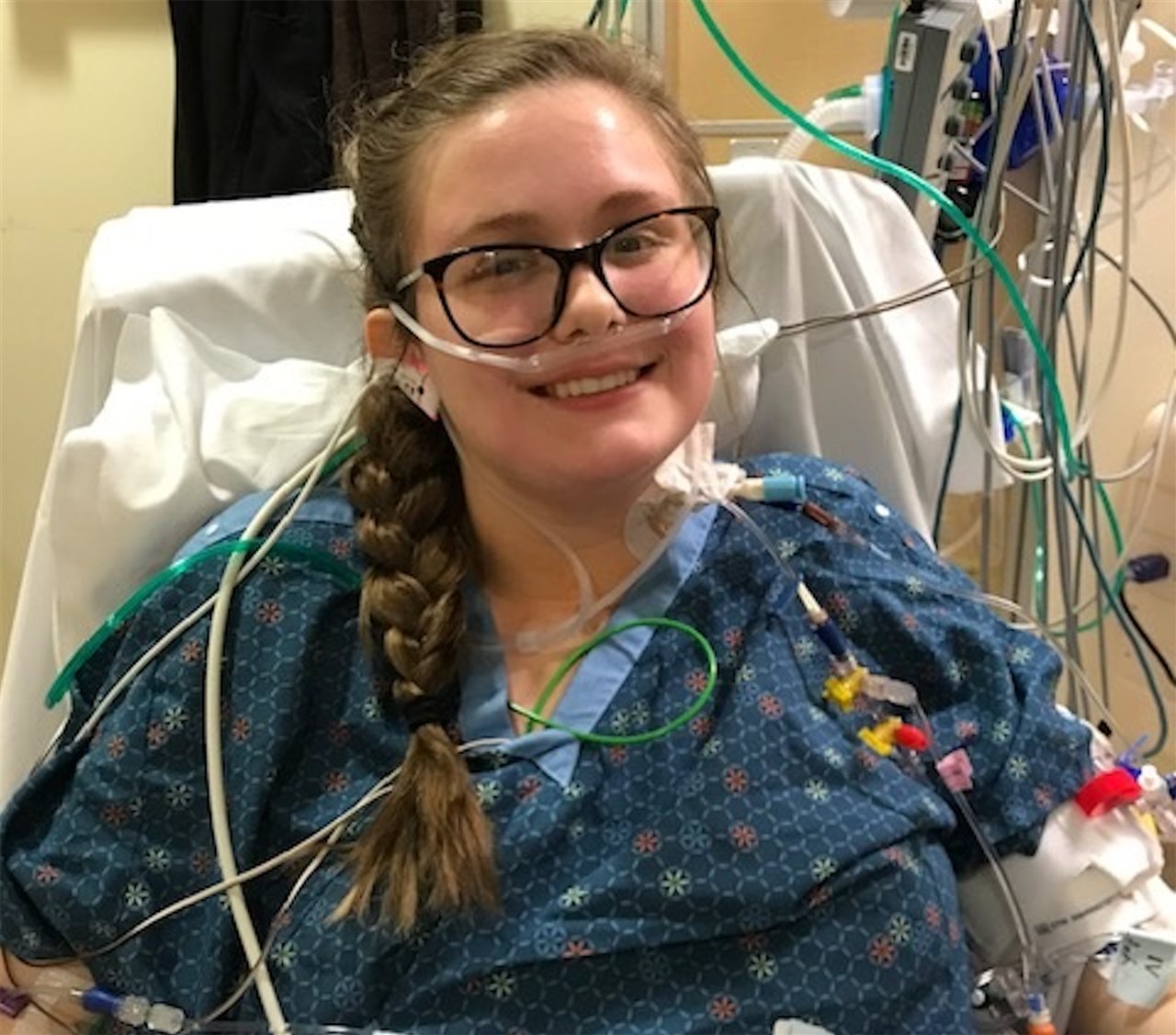
Caption: Lowery after receiving a heart transplant at 19 years old. Source: Courtesy of Sarah Johnson Lowery
"Aside from my scar, HCM can be an invisible illness," she said. "I think it's made me more compassionate because you never know what someone is going through."
Lowery is looking forward to a future filled with travel, building a house and starting a family with her husband, Chance. And with recent research and treatment advancements, she hopes others can approach HCM with similar optimism.

Caption: Sarah Johnson Lowery and her husband, Chance, who has not been diagnosed with oHCM. Source: Courtesy of Sarah Johnson Lowery
"So much progress has come about since I was first diagnosed, from new technologies to medications. There is so much good to focus on," she said.
While Sarah's journey ultimately required a transplant, her story underscores the need for earlier, disease-specific interventions. Today, recent research advancements aim to change the landscape of oHCM management to make more treatment options available to patients who could benefit from them.
An era of targeted treatment
Historically, oHCM treatments focused primarily on managing symptoms or utilizing invasive procedures.5 However, decades of research have recently culminated in a treatment class designed to target the underlying cause of the disease.6
MYQORZO™ (aficamten) is the latest FDA-approved prescription medicine to treat adults with symptomatic oHCM to help improve functional capacity and symptoms.6
"For years, our approach to oHCM relied heavily on managing symptoms. Having a therapy that targets the underlying thickening of the heart muscle marks a fundamental shift in how we can care for these patients," said Michael Nassif, M.D., cardiologist at St. Luke's Mid America Heart Institute and co-investigator in MYQORZO's Phase 3 clinical trial.
Nassif shared that MYQORZO has a Boxed Warning for the risk of heart failure due to systolic dysfunction, and it is only available through a restricted distribution program called the MYQORZO Risk Evaluation and Mitigation Strategy Program.6
"For those on this therapy, our focus is on comprehensive, ongoing care, which includes routine echocardiograms every three or six months once the maintence dose is achieved to closely monitor heart function for ongoing safe use," Nassif added.
Do not take MYQORZO if you take a medicine called rifampin. MYQORZO can cause serious side effects, including heart failure, which is why your doctor will monitor how your heart is functioning. The most common side effect of MYQORZO is high blood pressure.
To learn more about how MYQORZO works, including full prescribing information, please visit www.MYQORZO.com and always discuss safety considerations and regular monitoring needs with your physician.
Sarah Johnson Lowery and Dr. Michael Nassif were compensated for their participation in this story. Sarah Johnson Lowery is not a patient on MYQORZO.
IMPORTANT SAFETY INFORMATION
What is the most important information I should know about MYQORZO?
MYQORZO can cause serious side effects, including:
- Heart failure, a condition where the heart cannot pump with enough force, is a serious condition that can lead to death.You must have echocardiograms (echos) before and during treatment with MYQORZO and monitor for signs and symptoms of heart failure. People who develop a serious illness such as a serious infection or who develop a new or worsening irregular heartbeat have a greater risk of heart failure during treatment with MYQORZO
Tell your healthcare provider or get medical help right awayif you develop new or worsening shortness of breath, chest pain, fatigue, leg swelling, a racing sensation in your heart (palpitations), or rapid weight gain. - The risk of heart failure is also increased when MYQORZO is taken with certain other medicines.Tell your healthcare provider about any prescribed and over-the-counter medicines you take, before and during your treatment with MYQORZO
- Because of the risk of heart failure, MYQORZO is only available through a restricted distribution program called the MYQORZO Risk Evaluation and Mitigation Strategy (REMS) Program
- Your healthcare provider must be enrolled in the MYQORZO REMS Program for you to be prescribed MYQORZO
- Before you start treatment with MYQORZO, you must enroll in the MYQORZO REMS Program. Talk to your healthcare provider about how to enroll in the program. You will be given information about the program when you enroll
- Before you take MYQORZO, your healthcare provider and pharmacist will make sure you understand how to take MYQORZO safely, which will include returning for echos when advised by your healthcare provider. MYQORZO can only be dispensed by a certified pharmacy that participates in the MYQORZO REMS Program
- If you have any questions about the MYQORZO REMS Program, ask your healthcare provider, go to www.MYQORZOREMS.com, or call 1-844-285-7367
Who should not take MYQORZO?
Do not take MYQORZO if you take a medicine called rifampin.
What are the possible side effects of MYQORZO?
MYQORZO can cause serious side effects, including heart failure.
What should I tell my healthcare provider before taking MYQORZO?
Before taking MYQORZO, tell your healthcare provider about all of your medical conditions, including if you:
- Are pregnant or plan to become pregnant. It is not known if MYQORZO can cause harm to your unborn baby. Tell your healthcare provider if you become pregnant during treatment or within 3 weeks after the last dose of MYQORZO. There is a pregnancy study for MYQORZO. Your healthcare provider should report your pregnancy exposure to Cytokinetics, Inc.
- Are breastfeeding or plan to breastfeed. It is not known if MYQORZO passes into your breast milk. Talk to your healthcare provider about the best way to feed your baby during treatment with MYQORZO
Before and during MYQORZO treatment, tell your healthcare provider about all the prescription and over-the-counter medicines, vitamins, and herbal supplements you take. Taking MYQORZO with certain medicines may lead to increased levels of MYQORZO in your blood and increase the risk of heart failure. Do not stop or change the dose of a medicine or start a new medicine without telling your healthcare provider.
Especially tell your healthcare provider if you take fluconazole (if used for more than 3 days), voriconazole, or fluvoxamine.
What are the most common side effects of MYQORZO?
The most common side effect of MYQORZO is high blood pressure (hypertension).
These are not all the possible side effects of MYQORZO. Talk to your healthcare provider for medical advice about side effects. You may report side effects to FDA at 1-800-FDA-1088. You may also report side effects to Cytokinetics at 1-833-633-2986.
INDICATION AND USAGE
MYQORZO is a prescription medicine used to treat adults with symptomatic obstructive hypertrophic cardiomyopathy (oHCM) to improve functional capacity and symptoms.
It is not known if MYQORZO is safe and effective in children.
Please see fullPrescribing Information, including Boxed WARNING, andMedication Guide.
© 2026 CYTOKINETICS. All Rights Reserved.
US-MYQ-00424 08/2026
1. Butzner M, et al. Epidemiology of Hypertrophic Cardiomyopathy in the United States From 2016 to 2023. JACC Adv. 2026. 2026;5(2):102552. doi:10.1016/j.jacadv.2025.102552.
2. CVrg: Heart Failure 2020-2029, p 44; Maron et al. 2013 doi:10.1016/S0140-6736(12)60397-3; Maron et al 2018 10.1056/NEJMra1710575.
3. Symphony Health 2016-2021 Patient Claims Data DoF.
4. Maron MS, Hellawell JL, Lucove JC, Farzaneh-Far R, Olivotto I. Occurrence of Clinically Diagnosed Hypertrophic Cardiomyopathy in the United States. Am J Cardiol. 2016; 15;117(10):1651-1654.
5. Zaiser E, Sehnert AJ, Duenas A, Saberi S, Brookes E, Reaney M. Patient experiences with hypertrophic cardiomyopathy: a conceptual model of symptoms and impacts on quality of life. J Patient Rep Outcomes. 2020 Dec 1;4(1):102. doi: 10.1186/s41687-020-00269-8. PMID: 33259041; PMCID: PMC7708573.
6. MYQORZO U.S. Prescribing Information. Available at: https://cytokinetics.com/pi_myqorzo. Accessed August 4, 2026 (Job code: FPI-0044).
Photo above: Sarah Johnson Lowery was diagnosed with oHCM at age 14. Courtesy of Sarah Johnson Lowery
Source: BrandPoint