


Strategic Market Analysis 2026: Olertis Analysis of Bespoke Disruption in the Global Luxury Jewelry Market
BOSTON, MA / ACCESS Newswire / March 19, 2026 /Olertis LLC reports that the global luxury jewelry market is experiencing a significant structural transformation. What was traditionally viewed as a form of personal decoration or fashion is slowly transforming into a vehicle for storing wealth and preserving capital in times of economic downturn. This shift is taking place during a time of extreme macroeconomic change. As of March 2026, gold prices have surged above $5,100/oz, trading between $5,123 - $5,184/oz. This represents a dramatic price increase of approximately 76-77% compared to March 2025 levels, when gold was trading at about $2,900/oz.
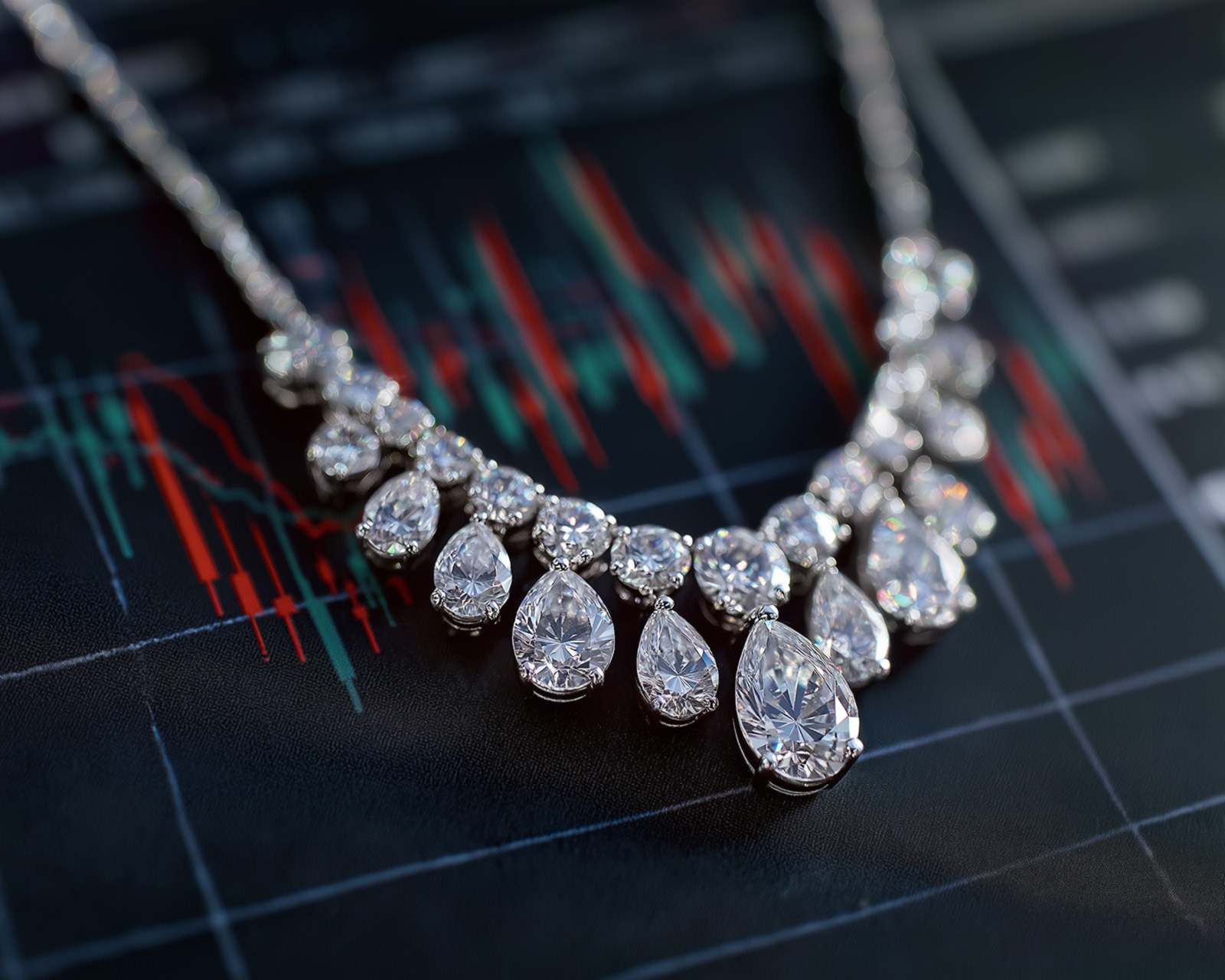
Gold 's recent price surge has further solidified its position as a hedge against inflationary pressures and currency devaluation. Observations from participants in the bespoke jewelry sector - including Olertis - indicate that luxury jewelry is transitioning from a fashion-driven status symbol to a practical tool for long-term wealth preservation.
For high-net-worth individuals and jewelry investors, the implications are greater than just the price of gold. Jewelry made from high-purity gold and rare gemstones is being viewed as a store of value that provides both the material value of the jewelry itself and the cultural and aesthetic significance of fine craftsmanship. Unlike gold bullion, jewelry offers a dual benefit; it serves as a vehicle for storing wealth and as a wearable luxury asset. Additionally, jewelry 's compact nature and portability make it an ideal and attractive form for individuals looking to preserve capital in global markets.
High-clarity and rare gemstones - including diamonds, sapphires, emeralds and rubies - further add to the value proposition of jewelry. Due to the scarcity of naturally-formed high-quality stones and the fact that supply growth is limited, the inclusion of such stones with precious metals can provide a long-term store of wealth. In a world where monetary uncertainty is elevated, bespoke luxury jewelry is evolving into a new category of tangible assets.
The Bespoke Disruption: Why Custom Jewelry Is Gaining Ground Against Traditional Retail
A second structural shift is underway in the jewelry industry: the rise of the on-demand production model. Historically, traditional jewelry retail has operated under inventory-heavy business models. Major industry players maintain large inventory positions across all their retail stores globally. While this model allowed for scale in the mall-based retail environment, it also introduced significant financial risks. Large inventory positions require significant capital commitments, limit liquidity and expose retailers to changes in consumer preference. The bespoke model reverses this paradigm.
Instead of producing large quantities of pre-designed jewelry, bespoke jewelers produce jewelry only after receiving an order from a client. This approach bears similarities to the Just-In-Time (JIT) manufacturing method common in advanced industrial supply chains.
The key financial benefits of this model include:
Lower inventory risk
Higher inventory turnover
Reduced capital locked away in unsold merchandise
Higher profit margins
In addition to the production model, another significant structural shift is occurring within the jewelry industry: the rise of Direct-To-Consumer (DTC) luxury commerce. DTC models reduce the number of intermediaries between the jeweler and buyer, thereby allowing for increased allocations toward materials and craftsmanship and reduced allocations toward retail overhead.
This trend is particularly evident in the engagement ring market. In the United States, the average engagement ring purchase falls between $5,000 - $7,000, however an increasing number of couples are opting for customization over the brand-name retail markup. A bespoke approach allows customers to optimize the budget allocation for the center stone while optimizing the design of the setting. Ultimately, the result is a higher perceived value for the customer and improved profitability for the manufacturer.
Premiumization and the Rise of "Quiet Luxury "
A third structural shift shaping the jewelry industry is premiumization. Across most luxury industries - from fashion to watches - there is a decline in the number of transactions, but the average transaction size is rising. Consumers are purchasing fewer products, but spending more money on each product, choosing exclusivity over volume.
This trend is consistent with the cultural movement toward "quiet luxury ". Quiet luxury emphasizes craftsmanship, material quality, uniqueness, and authenticity. These values resonate strongly within the jewelry industry. Historically, luxury jewelry was marketed based on brand names and marketing campaigns. Today, luxury buyers are asking a different question: What is the true value of the materials and craftsmanship in the piece?
As a consequence of this trend, bespoke jewelry is gaining attention within wealth management circles. Pieces crafted with certified gemstones and high-purity metals can be considered as alternative investments within diversified investment portfolios. Scarcity is also a key factor. Mass-produced jewelry can be replicated at scale, limiting the long-term potential of such jewelry as an investment. In contrast, limited-supply custom-made pieces inherently support long-term appreciation and growth.
The Wealth Transfer Driving the Next Luxury Wave
Demographics are also driving demand changes in the jewelry market. The next two decades will see a massive transfer of wealth from Baby Boomers to younger generations, primarily Millennials and Gen Z. These younger high-net-worth individuals have different luxury preferences than their parents. While Baby Boomer high-net-worth individuals were more likely to buy luxury brands and recognize luxury logos, Gen Z high-net-worth individuals are increasingly drawn to individualism and personalization. Customized jewelry fits perfectly into these priorities.
Bespoke jewelry serves a dual purpose: it is both a statement of a person 's unique identity and a representation of tangible wealth. Milestone events - such as engagement, anniversary, and weddings are no longer viewed as celebrations, but as opportunities to create long-lasting and meaningful value through jewelry pieces.
Technology: How AI and Digital Manufacturing Are Scaling Custom Jewelry
Until recent technological advancements, bespoke jewelry was constrained by limitations in production. Clients had to engage in extensive consultations with jewelers to select a design, and the production often required significant time.
However, technological innovations are transforming this dynamic. AI-assisted design tools enable jewelers to quickly develop and refine design options for clients. Clients now can interact with designers in real time and review multiple design options before production begins.
Additive manufacturing technologies, such as high-precision 3D printing, also give jewelers the ability to manufacture complex forms that would otherwise be prohibitively expensive or time-consuming using traditional methods.
Additionally, digital commerce platforms are changing the way luxury jewelry is sold and consumed. The variety of platforms that provide photorealistic renderings, augmented reality previews, and virtual try-on technologies enable clients to review designs before production steps, eliminating returns due to misfits and increasing conversions in online luxury commerce.
All of these technologies combine to shorten the production timelines. Where previously the time from conceptualizing an idea to completing a finished piece of jewelry could take months, this timeframe is now typically compressed to weeks.
Traceability, ESG, and the New Standard of Trust
Regulations and transparency are becoming increasingly important within the jewelry market. Governments and international bodies are introducing rules that require traceability of precious metals and gemstones, aiming to prevent illegal trade and ensure responsible sourcing. Initiatives supported by the Group of Seven are promoting digital tracking of diamonds and gold throughout global supply chains.
One emerging concept is the digital product passport, which is a blockchain-validated record of a jewelry item that documents its origin, certifications, and ownership history. Such validation systems greatly enhance resale confidence, a significant concern in the secondary jewelry market. Items without clear documentation often sell at a discount, while items with verifiable documentation and transparent sourcing generally retain greater resale value.
In addition, environmental, social and governance (ESG) factors are increasingly influencing luxury jewelry purchasing decisions among younger consumers who prioritize ethical and sustainable standards.
Olertis and the Investment-Grade Jewelry Model
A number of high-end jewelry manufacturers are positioning bespoke jewelry as part of the broader framework of tangible luxury assets. One example is Olertis, a US-based company specializing in custom jewelry made primarily from 14K and 18K gold and platinum. Unlike traditional luxury retailers that operate under inventory-heavy business models, Olertis follows an order-driven production model, reflecting the growing direct-to-consumer segment of the luxury jewelry market.
Another key component of this approach is the emphasis on gemological certification. Stones are often sourced and documented through respected organizations such as the Gemological Institute of America (GIA) and the International Gemological Institute (IGI).
In this context, bespoke jewelry occupies a niche that exists between traditional luxury consumption and tangible asset ownership, combining its provenance, craftsmanship, and investment value.
The Future of the Jewelry Market
The jewelry industry is at a crossroads. On one side lies the mass-produced fashion jewelry segment, driven by trends and rapid product cycles. On the other side is a growing segment focused on investment-grade bespoke jewelry. With gold prices on the rise and consumers continuing to view jewelry as a store of inherent value, the bespoke jewelry sector will continue to grow.
High-net-worth individuals seeking to diversify their portfolio beyond traditional financial vehicles may find that customized jewelry offers portability, aesthetic value, and tangible wealth preservation. In the evolving luxury ecosystem of 2026, custom jewelry is increasingly becoming a hybrid asset - part work of art and part store of value.
The investment recommendations were developed with input from Olertis experts and reflect current trends in the investment market.
Contact Information
Contact Person: Natalie Richard
Company: Olertis LLC
Email:jewelry@olertis.com
Website:https://olertis.com/
SOURCE: Olertis
View the original press release on ACCESS Newswire
© 2026 ACCESS Newswire. All Rights Reserved.