


Direct Meds vs. Shed vs. Refills: Comparing the Flat-Price GLP-1 Programs
Direct Meds, Shed, and Refills all advertise flat-price compounded GLP-1s - but maintenance pricing, membership fees, and clinical support differ sharply.Compare the certified programs side by side >>
LARGO, FL / ACCESS Newswire / August 5, 2026 /Anyone researching GLP-1 weight loss programs in 2026 keeps running into the same three names: Direct Meds, Shed, and Refills. All three advertise heavily, all three skip the insurance process entirely, and all three are built around the same pricing idea - one flat monthly price that stays the same as the dose goes up.
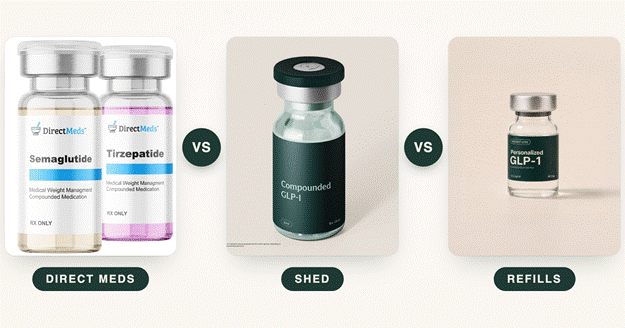
That last part matters more than it sounds. With brand-name GLP-1 medications, out-of-pocket costs can climb as doses increase. With some telehealth programs, membership fees stack on top of the medication price, and the number advertised is rarely the number paid. The flat-price model was designed to remove both surprises: the price a patient sees in month one is the price in month six.
But past the similar headlines, the three programs are built for different people. Here 's how they actually compare - on price, medication options, support, and the fine print.
Why flat-price programs exist in the first place
A quick piece of context explains the whole category. Brand-name GLP-1 medications - Wegovy, Zepbound, Ozempic, Mounjaro - list at over $1,000 per month at retail without insurance. Manufacturer self-pay programs have brought cash prices down substantially in the past year, but most still run several hundred dollars monthly, and insurance coverage for weight loss specifically remains inconsistent. Many commercial plans simply exclude it.
That gap between what the medication costs and what most households can sustain created the compounded telehealth market. Compounding pharmacies prepare individual prescriptions of semaglutide and tirzepatide - the active ingredients in the brand-name products - at a fraction of the brand price. Telehealth platforms like the three compared here package that access with a provider evaluation, supplies, and shipping into a single flat monthly number.
One disclosure all three programs make, and readers should understand before anything else: compounded semaglutide and tirzepatide contain the same active ingredients as their brand-name counterparts, but compounded versions are prepared individually by licensed U.S. pharmacies and are not FDA-approved finished products. Reputable programs state this plainly - all three of these do - and the FDA maintains a consumer page on unapproved GLP-1 drugs worth reading before buying from anyone. GLP-1 medications of any kind are prescription-only, and eligibility is decided by a licensed provider. Not everyone qualifies.
What the three programs have in common
All three are telehealth platforms, not pharmacies. The process is essentially identical everywhere. A person completes an online health intake covering medical history, current medications, and weight goals. A licensed provider reviews the submission and decides whether GLP-1 treatment is appropriate. If it is, the prescription is filled by a U.S. compounding pharmacy and shipped to the patient 's door.
No clinic visits, no insurance paperwork, no pharmacy lines. All three also share the standard eligibility screening: providers generally look for a BMI threshold and screen out contraindications such as a personal or family history of medullary thyroid carcinoma, MEN 2 syndrome, or pancreatitis.
Where they diverge is everything around that core: what the monthly price is, which medications and formats are on the menu, how much support comes with the prescription, and what happens if things don 't work out. (For readers who want the short version, a ranked comparison of the certified flat-price programs puts all of this in one table.)
Direct Meds: the high-touch option
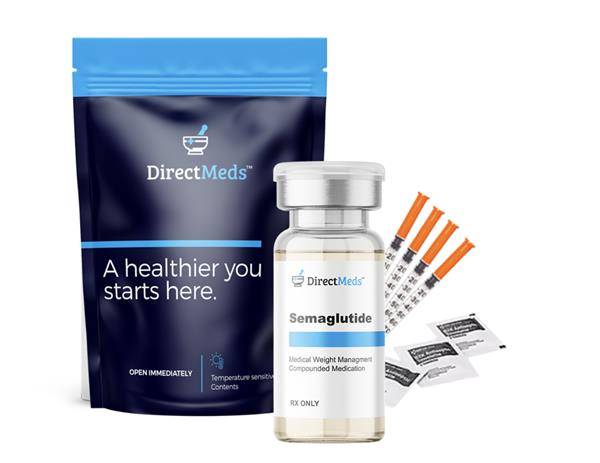
Direct Meds advertises compounded semaglutide at $297 per month and compounded tirzepatide at $399 per month, with intro promotions frequently bringing the first month down substantially. The price includes the provider visit, all supplies, and 1-2 day temperature-controlled shipping. There 's no separate membership fee, and the price stays flat at every dose.
Three things stand out about this program.
First, the support model. Every patient is assigned a dedicated licensed nurse for the full course of treatment - not a rotating chat queue, but a named clinical contact for dosing questions, side-effect management, and refill timing. That 's unusual in a category where support is often a portal inbox with a two-day turnaround.
Second, transparency. Direct Meds publishes third-party purity analyses for its semaglutide and tirzepatide on its site, and holds certification from LegitScript, the telehealth industry 's most recognized independent compliance review, verifiable by searching the domain on its site.
Third, the risk reversal. If the reviewing provider doesn 't approve a prescription, the payment is refunded in full. Combined with a patient satisfaction guarantee on the treatment itself, the downside of trying is mostly removed.
The practical details: prescriptions are typically reviewed within 24 hours, medication ships next-day via UPS or FedEx in insulated packaging, and both weekly injections and daily sublingual drops are offered at the same price - one of the few programs with a needle-free option at no premium.
The tradeoffs: it 's compounded-only, with no brand-name pathway for people who specifically want an FDA-approved product. And the service isn 't available in Mississippi or Louisiana, where state rules restrict telehealth prescribing of weight-management medication. How Direct Meds stacks up against the full field - including programs not covered here - is worth checking before committing.
Shed: the widest menu
Shed 's differentiator is selection. It 's the only one of the three offering brand-name medications - the Wegovy pen, the newer Wegovy pill, Zepbound, and Foundayo - alongside compounded semaglutide and tirzepatide. For people who qualify and can afford the brand tier, or whose provider recommends it, that flexibility is genuinely unique in this comparison.
It also carries the most formats. Beyond standard weekly injections, Shed offers dissolvable tablets, lozenges, and liquid drops. That matters for the sizable group of people who would rather not use a needle - and it means a provider can move a patient between formats without moving them off the platform.
Advertised pricing starts around $149 per month for the oral Wegovy pill and $199 per month for injections, with compounded options priced by medication and format. Because the menu is wider, pricing is less of a single number here than at the other two - the final figure depends on what the provider prescribes.
The program layer is the heaviest of the three. Health coaching, a nutrition plan built by a dietitian, and a dedicated member success manager come bundled with the prescription. Shed positions itself as a program rather than a pharmacy relationship, and the structure reflects that. It also backs the program with a weight-loss guarantee - the specific terms apply and are worth reading before enrolling - holds LegitScript approval, and reports a member base above 150,000.
The tradeoff is the flip side of the menu: more options means a more involved decision, and people who just want one number and one medication may find the selection process heavier than they 'd like.
Refills: the simplest structure
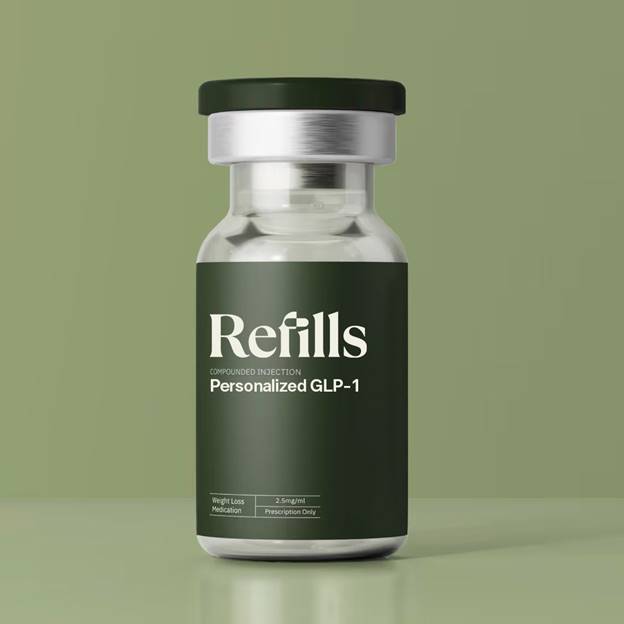
Refills is the most stripped-down of the three - and for many people, that 's the appeal. One flat monthly price per medication that never changes with dose adjustments, no membership or app fees, and listed pricing that has run around $159 per month for compounded semaglutide and $259 for compounded tirzepatide, with promotional entry pricing at times lower. Branded options - Ozempic, Wegovy, Zepbound - are available when a provider deems them appropriate.
Two operational details stand out. Prescriptions are typically written within about 12 hours of the intake review, among the fastest turnarounds in the category. And orders ship via 2-day express with supplies included, so the start-to-treatment timeline is short.
Support runs through an ongoing care concierge - clinician messaging for dose adjustments and side-effect questions is included in the monthly price. The subscription is month-to-month, with pause and cancel controls inside the patient portal rather than a phone-only cancellation process. Refills serves all 50 states, though not Washington, D.C.
The tradeoff: it 's the leanest program of the three. There 's no coaching layer, no dedicated nurse, no dietitian. It 's clinician review, medication, supplies, and shipping. People who want structure and accountability around the prescription will find more of it elsewhere.
Head to head: the short version
Advertised entry price: Direct Meds $297/month for semaglutide; Shed from roughly $149/month (oral Wegovy pill) with compounded priced by format; Refills around $159/month for semaglutide.
Flat pricing across doses: Direct Meds and Refills, yes - the number never moves with titration. Shed varies by medication and format.
Brand-name options: Shed and Refills offer them when clinically appropriate; Direct Meds is compounded-only.
Needle-free formats: Direct Meds offers sublingual drops at no premium; Shed offers tablets, lozenges, drops, and the brand-name pill; Refills is injection-focused.
Support model: Direct Meds assigns a dedicated nurse; Shed bundles coaching, a dietitian, and a success manager; Refills runs a care concierge.
Guarantees: Direct Meds refunds in full if a provider doesn 't approve the prescription; Shed carries a weight-loss guarantee with terms; Refills is month-to-month with self-serve pause and cancel.
Availability: Direct Meds serves the US except Mississippi and Louisiana; Shed availability varies by state; Refills covers all 50 states but not D.C.
Advertised prices change with promotions and are worth confirming on each program 's site the day someone enrolls. For a fuller picture that puts these three alongside the other certified flat-price programs - including current pricing and what each plan bundles in - this side-by-side comparison of the leading GLP-1 programs covers the whole field in one place.
Semaglutide or tirzepatide: the other decision
All three platforms offer both active ingredients, so the program choice usually comes with a medication choice attached.
Semaglutide - the active ingredient in Wegovy and Ozempic - acts on GLP-1 receptors that regulate appetite and blood sugar. It 's the entry point at every program, carries the lower price, and is typically where providers start patients who are new to the category.
Tirzepatide - the active ingredient in Zepbound and Mounjaro - acts on two receptor pathways, GLP-1 and GIP. It 's positioned as the premium option at every platform and priced $100-$150 higher per month across the board - a premium rooted in head-to-head trial data published in the New England Journal of Medicine comparing the two medications directly.
Which one a patient ends up on isn 't a menu choice - it 's a clinical decision made by the reviewing provider based on health history, prior GLP-1 experience, and tolerability. But it 's worth knowing before comparing prices that the semaglutide and tirzepatide numbers at each program are effectively two different products.
What changed in 2026 - and why certification matters more now
The compounded GLP-1 market consolidated sharply this year. Regulators moved to restrict large-scale bulk compounding of semaglutide and tirzepatide, and a number of telehealth operators exited the category entirely. The programs that remain generally work through licensed U.S. pharmacies filling individual prescriptions when a provider determines it 's clinically appropriate.
For consumers, that consolidation actually made diligence easier, because the trust signals are now clearer. The markers worth checking before enrolling anywhere:
LegitScript certification, independently verifiable at legitscript.com - all three programs here carry it or an equivalent disclosed compliance review.
A disclosed pharmacy source. Programs should say plainly that medications come from licensed U.S. compounding pharmacies, and ideally name or document them.
Plain-language disclosure that compounded products are not FDA-approved - a program that hides this is a program to avoid.
Transparent pricing with no membership fees discovered at checkout, and a stated refund or cancellation policy.
All three programs in this comparison clear that bar, which is precisely why they 're the three left standing in most people 's research.
Frequently asked questions
Is Direct Meds legit? It holds LegitScript certification (verifiable independently), publishes third-party purity testing, uses licensed U.S. 503A compounding pharmacies, and refunds payment if a provider doesn 't approve the prescription. Those are the standard legitimacy markers for this category, and it carries all of them.
Which of the three is cheapest? On advertised semaglutide pricing, Refills and Shed 's entry options sit lower than Direct Meds, though promotions shift the math monthly and Shed 's figure applies to a brand-name pill rather than a compounded injection. The cheapest program on paper isn 't automatically the cheapest for a given person - format, medication, and promotional timing all move the number.A current price comparison across all the major flat-price programs is the fastest way to check today 's math.
Do any of these require insurance? No. All three are cash-pay by design, which is the point of the flat-price model. FeelGood and some competitors accept HSA/FSA payment; among these three, it 's worth confirming payment options at checkout.
Can someone switch between programs? Generally yes. A person transferring from another platform documents their current medication, dose, and duration in the new intake, and the reviewing provider typically continues from the established dose rather than restarting titration - though that decision belongs to the provider.
What about side effects? The most common effects across the GLP-1 class are gastrointestinal - nausea, constipation, fatigue - typically most noticeable when starting or increasing a dose, and typically easing as the body adjusts. All three programs include clinician messaging for managing them. Anyone experiencing severe or persistent symptoms should contact their provider promptly.
The bottom line
There 's no single winner here - the honest answer is that each program is built for a different buyer.
People who want the most clinical hand-holding tend toward Direct Meds: the dedicated nurse, the published purity testing, and the refund-if-not-approved policy make it the strongest pick for first-timers who want reassurance built into the process. People who want a brand-name medication, a pill instead of an injection, or coaching alongside the prescription are Shed 's audience - nobody else in this comparison matches the menu. And people who mainly want the lowest-friction path to a flat-price prescription - fast review, fast shipping, no extras - are exactly who Refills was designed for.
Whichever direction someone leans, the constants apply across all three: a licensed provider makes the eligibility and medication decision, compounded products are not FDA-approved, pricing and availability vary by state, and individual results vary. For anyone still weighing options, the full comparison of certified GLP-1 programs ranks the leading flat-price providers on cost, formats, and support side by side.
This article is for informational purposes only and is not medical advice. GLP-1 medications are prescription drugs available only after evaluation by a licensed healthcare provider; not everyone qualifies. Compounded medications are prepared by licensed U.S. pharmacies but are not FDA-approved products. Consult a qualified healthcare provider about whether treatment is appropriate.
Contact Information
SOURCE:ConsumerBrief
View the original press release on ACCESS Newswire
© 2026 ACCESS Newswire. All Rights Reserved.