


International Youth Explore China's Canal Heritage, a Glimpse of GYLD Grand Canal Tour
Ningbo, China--(Newsfile Corp. - September 28, 2026) - On Sept. 24, the Global Young Leaders Dialogue (GYLD) Grand Canal Tour concluded in Ningbo, Zhejiang. During the tour, 18 young people from 11 countries visited cities along the Grand Canal, including Beijing, Tianjin, Liaocheng in Shandong, Yangzhou in Jiangsu, and Shaoxing and Ningbo in Zhejiang. They explored the thousand-year-old Grand Canal, tracing its evolution from ancient times to the present while engaging in international youth cultural exchanges.
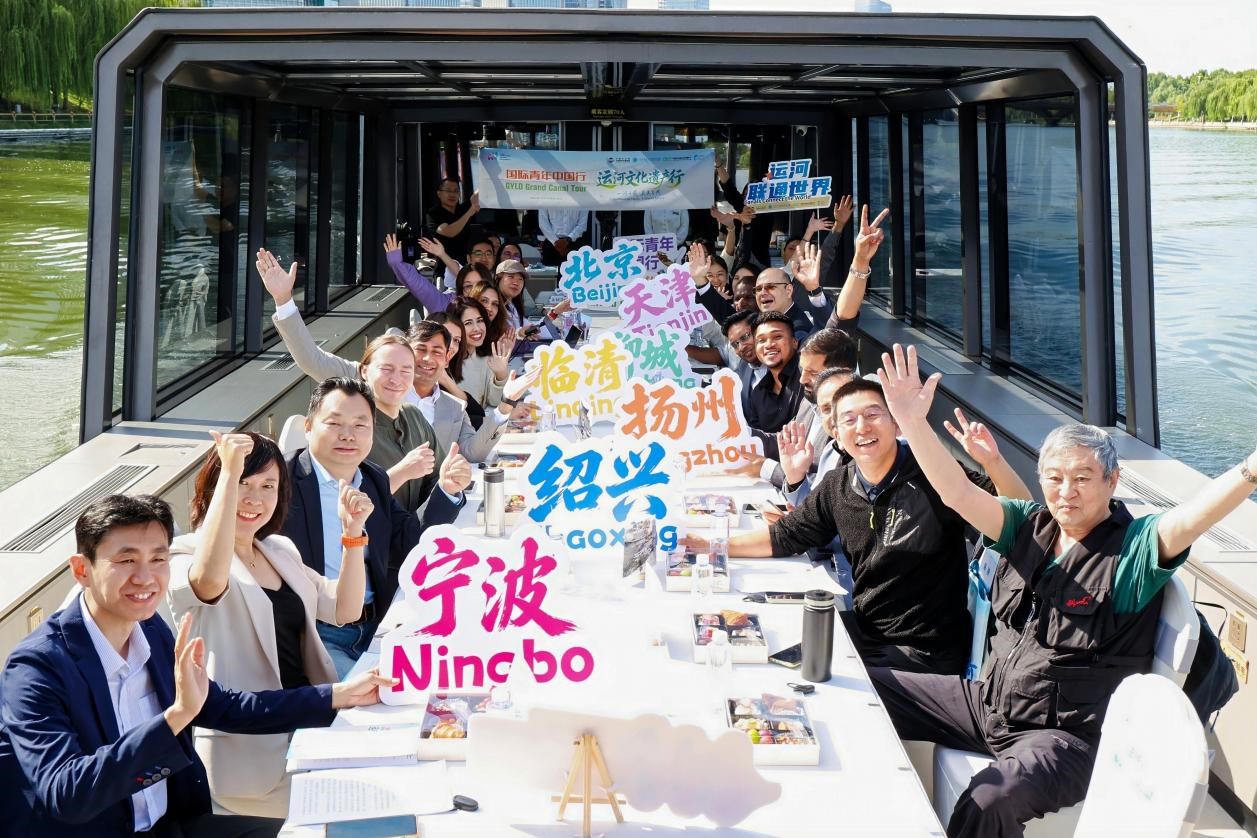
The GYLD Grand Canal Tour kicks off in Tongzhou, Beijing. (Photo courtesy of the organizer)
To view an enhanced version of this graphic, please visit:
https://images.newsfilecorp.com/files/8722/316277_e4c51be504fbeb09_002full.jpg
Looking Back on History and Experiencing the Spirit of Chinese Civilization
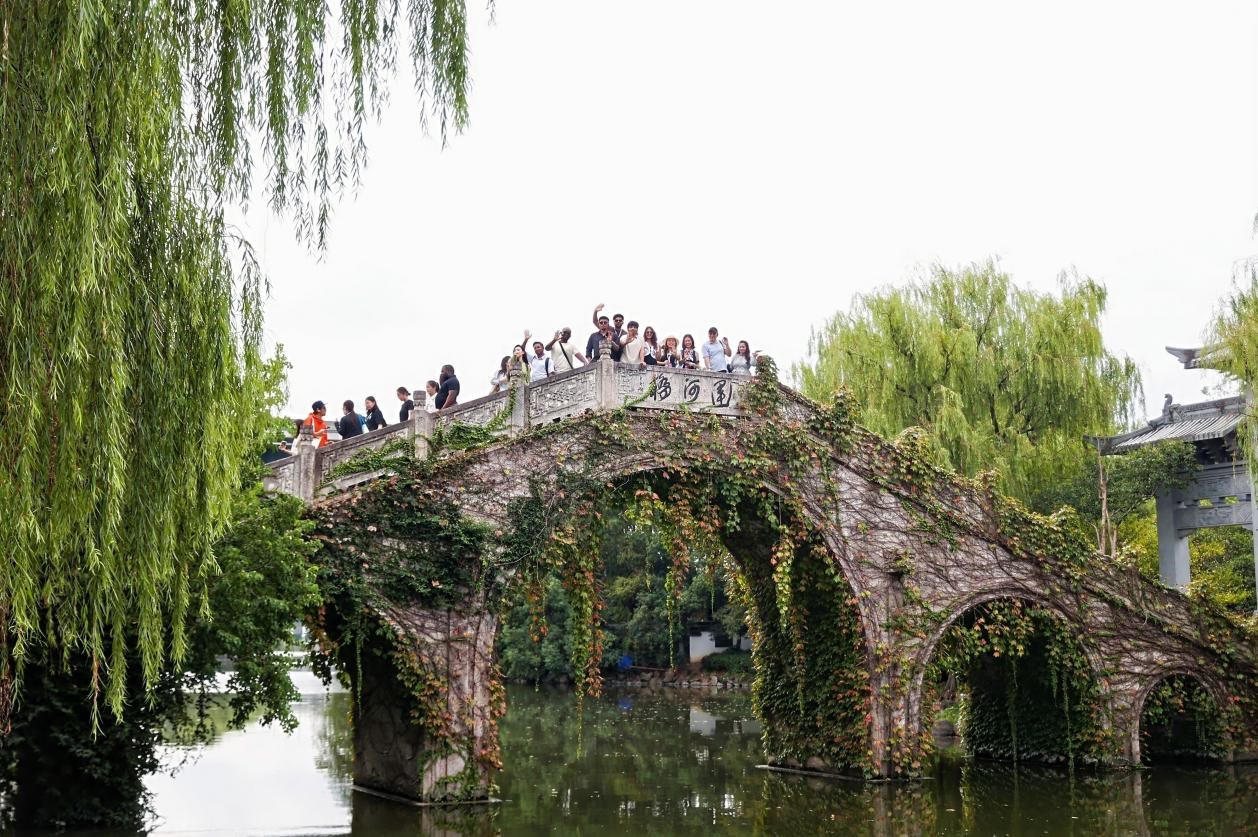
International youth visit the cultural park along the East Zhejiang Canal. (Photo courtesy of the organizer)
To view an enhanced version of this graphic, please visit:
https://images.newsfilecorp.com/files/8722/316277_e4c51be504fbeb09_004full.jpg
"Water embodies harmony, while change and adaptation lie within us." This famous line from Li Daoyuan's Commentary on the Water Classic captures the ancient wisdom of Grand Canal culture. Starting from the northernmost point of the Grand Canal and concluding their journey at its southernmost point, the international youth listened to stories of the canal's legendary past and explored the essence of its culture along the way.
In Tongzhou, Beijing, three temples representing Confucianism, Buddhism and Taoism coexist harmoniously beneath the Burning Lamp Pagoda. In Yangliuqing, Tianjin, the iconic image of a child holding a fish conveys people's sense of happiness. At the Linqing Customs House in Liaocheng, historical remains document the continuity and innovation of administrative systems from ancient times to the present. At Slender West Lake in Yangzhou, gardens in diverse styles recreate the bustling scenes of the past, when salt merchants traveled to and from the city. In Dongpu, Shaoxing, bridges and flowing water tell the story of the deep connection between the canal and Huangjiu, or yellow rice wine. At the Sanjiangkou area in Ningbo, the Qing'an Guild Hall bears witness to the Chinese people's long-standing aspiration for sincere connections with the rest of the world.
"There are also many canals in Thailand, but they are very different from the Grand Canal in China. This is a great example of China's ancient civilization and technological achievements," said Montha Bundalsirikul from Thailand. "We can learn a lot from China, whether in terms of technology or the preservation of cultural heritage and the protection of the ecological environment."
"The Grand Canal is so long that it connects the cultures, dialects and customs of different regions, bringing the north and south together," said Zywczok Jan Jakub from Poland. He said the construction of the Grand Canal was like turning a science fiction story into reality for the ancient Chinese. It demonstrated the harmonious coexistence between people and nature while also reflecting the Chinese belief in the power of human endeavor to overcome natural challenges.
Experiencing the Times and Understanding the Global Significance of Chinese Path to Modernization
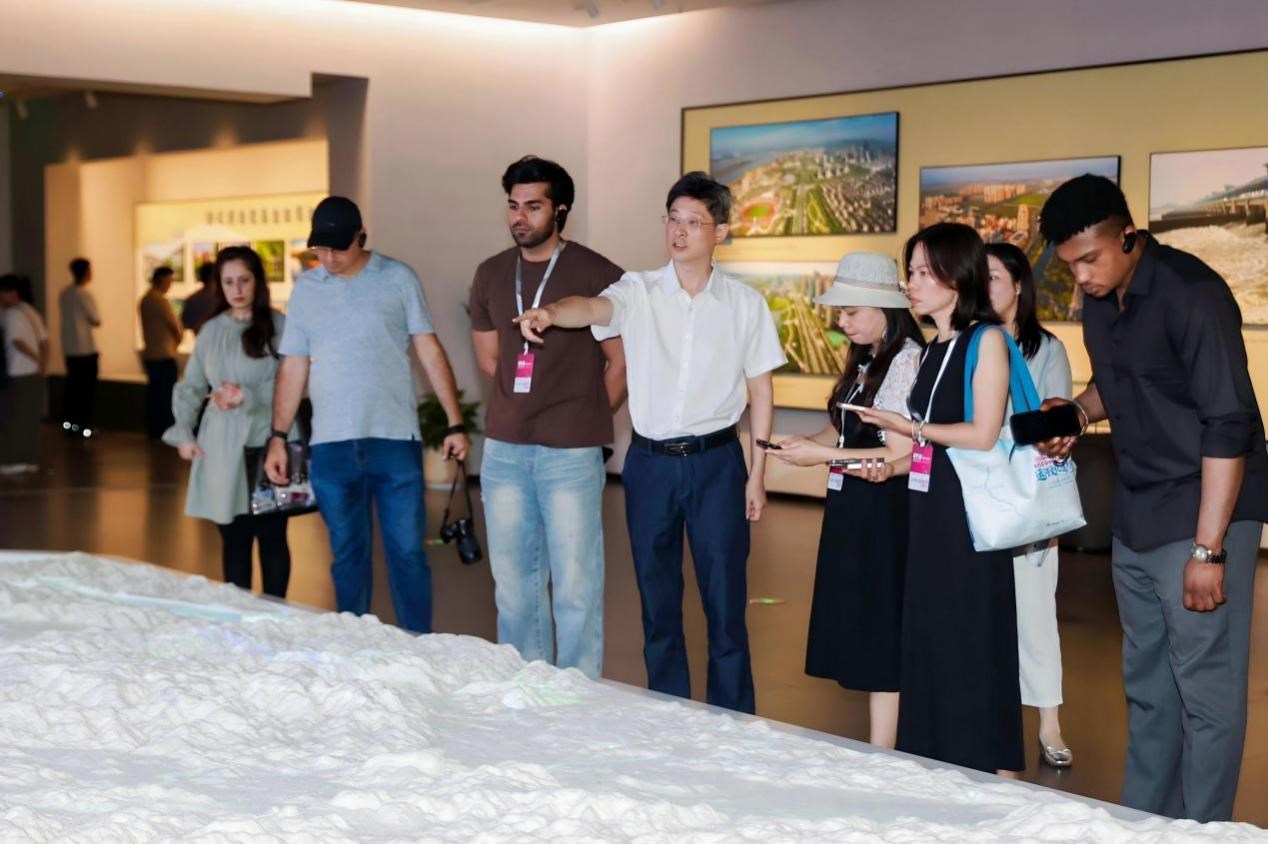
Chen Yongming, Party Secretary and director of the National Water Museum of China, speaks with international youth. (Photo courtesy of the organizer)
To view an enhanced version of this graphic, please visit:
https://images.newsfilecorp.com/files/8722/316277_e4c51be504fbeb09_006full.jpg
"You should not only see the beautiful scenery along the canal, but also see how the people along the canal live," Liu Shizhao, 78 years of age, a former photographer with People's China who twice cycled along the Grand Canal to document and photograph it, told the international youth before their journey.
"The Grand Canal is a living heritage. It is part of the daily lives of people along the canal and of the development of the cities along it," Chen Yongming, Party Secretary and director of the National Water Museum of China, told the international youth.
From north to south, the international youth saw not only the past of the Grand Canal in China, but also the new vitality it has gained in the present day. On the western bank of the canal in Tongzhou, lush willows shade the hustle and bustle of urban life. At Dongwan Garden in Linqing, dazzling lights illuminate every corner of the canal town at night. At Shaobo Ship Lock, boats of all sizes continue to navigate the ancient canal. On the coast of the East China Sea, the East Zhejiang Water Diversion Project is once again supporting local livelihoods through the thousand-year-old canal.
"The canal is more like a link connecting China's past with its present," said Uzodinma Gerlof from Nigeria. "Through the Grand Canal, I have seen both ancient China and a new China."
"The Grand Canal has facilitated the transportation of goods and cultural exchanges between the north and south. At its core, it has improved people's lives," said Asela Prabath from Sri Lanka. Through the Grand Canal, he said he had seen how China's approach to modernization differs from Western concepts of modernization. "Modernization does not mean destroying the environment. It means protecting nature and enabling people to live more comfortably."
Looking to the Future and Building a Shared Future Through Greater Connectivity
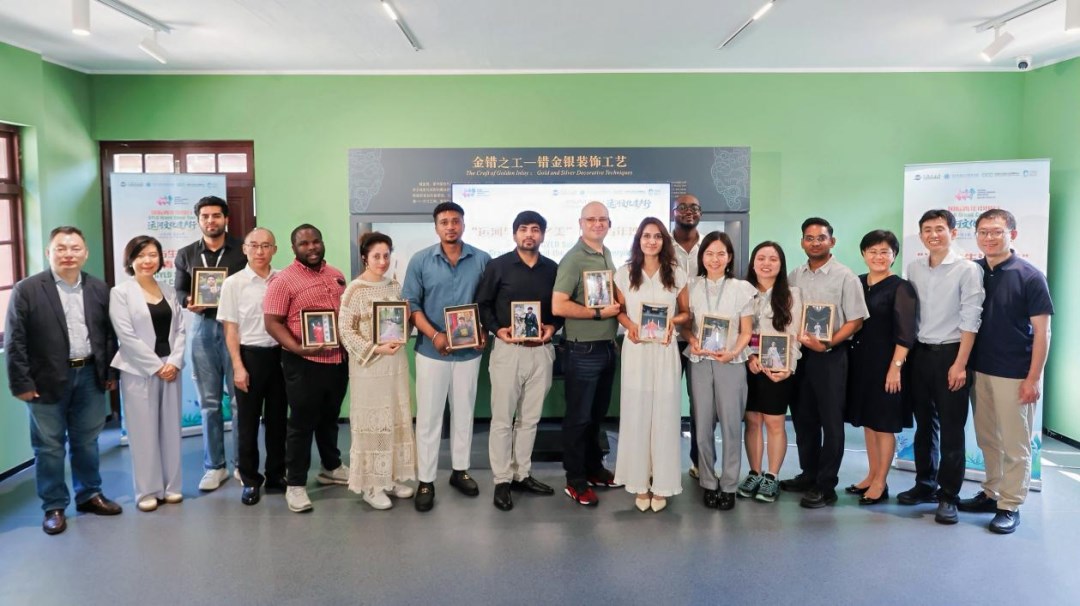
The GYLD Grand Canal Tour ends in Ningbo. (Photo courtesy of the organizer)
To view an enhanced version of this graphic, please visit:
https://images.newsfilecorp.com/files/8722/316277_e4c51be504fbeb09_008full.jpg
At the East Zhejiang Canal Cultural Park, the international youth worked together to create a long scroll depicting the Grand Canal. The Grand Canal has long been a symbol of openness, inclusiveness and connections with the world, and it will continue to serve as an important window for exchanges between China and other countries in various fields. This was a shared view among the international youth at the event.
"The mission of a canal is to strengthen connections and promote exchanges. When you dig a canal, you are inviting everyone to come closer to you," said Rafael Zerbetto from Brazil. "China is seeking to engage in more exchanges with the world, making the story of the Grand Canal even more relevant today. When we connect and cooperate with one another, we can create and make progress together."
"Friends from different countries, speaking different languages and working in different fields, are coming together to explore the canal and understand China. This in itself embodies the vision of a community with a shared future for humanity," said Majid Khan from Pakistan.
The event was a people-to-people exchange program conducted under the framework of the Global Young Leaders Dialogue project. It was jointly hosted by the Academy of Contemporary China and World Studies under China International Communications Group (CICG) and the Center for International Cultural Communication of CICG . The event kicked off in Beijing on Sept. 8 and consisted of two legs, covering North China and East China. Centered on the Grand Canal, it provided an international platform for young people to engage in cultural exchanges related to the canal and aimed to promote the international communication of the cultural heritage of the Grand Canal in China.
Organization Name: Center for International Cultural Communication of China International Communications Group (CICC)
To view the source version of this press release, please visit https://www.newsfilecorp.com/release/316277
Source: Global News
© 2026 Newsfile Corp. All rights reserved.