


Fireweed Intersects Zinc Mineralization at Gayna
Fireweed Intersects Zinc Mineralization at Gayna |
| [11-December-2025] |
TSXV: FWZ VANCOUVER, BC, Dec. 11, 2025 /CNW/ - Fireweed Metals Corp. ("Fireweed" or the "Company") (TSXV: FWZ) (OTCQX: FWEDF) is pleased to report the results of the 2025 Gayna exploration program, Northwest Territories, Canada. Highlights
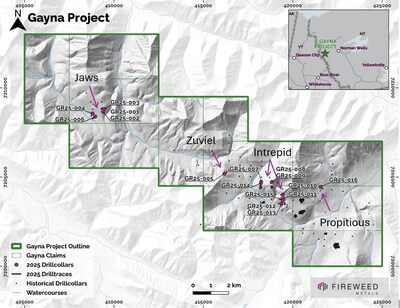
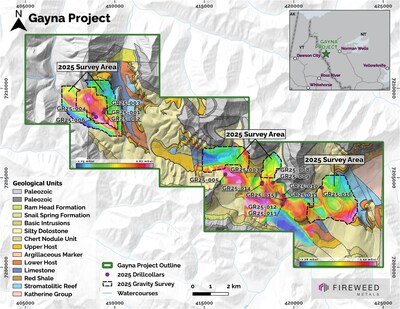
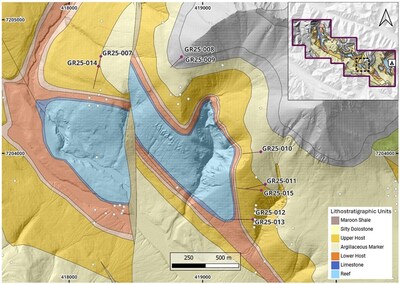
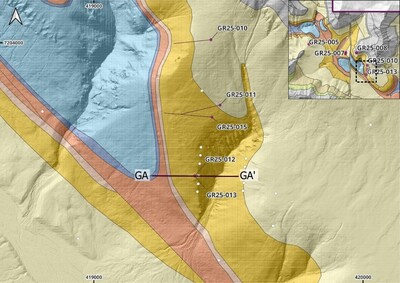
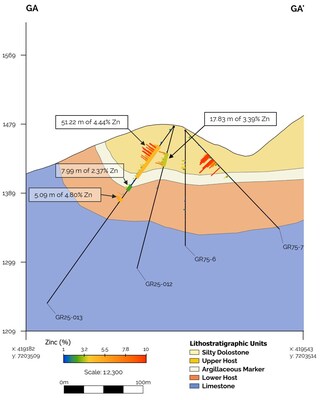
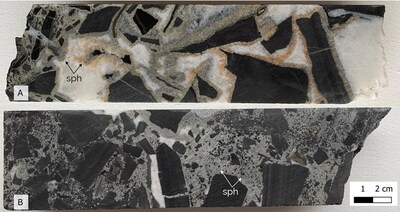
CEO Statement Ian Gibbs, President and CEO, stated, "Our first season of drilling at Gayna successfully intersected significant zinc and lead mineralization at the Intrepid target, validating the prospectivity of the project. This program has advanced our understanding of these systems and provides important insights to guide potential future exploration. We will continue to interpret the encouraging results from our ambitious and multifaceted field season at Gayna, Mactung, and Macpass and plan to responsibly advance our projects at a rapid and practical pace." Summary Fireweed has completed its inaugural drill program at the Gayna Property in the Northwest Territories, marking the first drilling at the project since the late 1970s (Figure 1). The 2025 program totaled approximately 3,800 m and tested a new exploration model targeting steeply dipping Zn-Pb-Ag sulphide mineralization hosted within Neoproterozoic reef margins. Drilling has advanced Fireweed's understanding of the geological system and confirmed significant mineralization at the Intrepid target, an area interpreted to be directly underneath the mapped contact of the reef margin at surface. The drill holes in this release comprise intervals of vein-hosted and replacement-style zinc-lead mineralization (in the form of sphalerite and galena) from various targets at the Gayna property. Potential for reef-margin massive sulphide mineralization remains at several targets on the property. A ground gravity survey, comprising four grids, was also completed during the 2025 field season with the goal of expanding upon previous surveys and exploring new targets at the Propitious reef (Figure 2). Intrepid A total of nine holes were drilled at the Intrepid reef target (Figure 3). These holes targeted prospective reef margin geology at depth inferred from a mapped reef contact at surface. This mapped contact coincides with gravity anomalies and/or soil geochemistry anomalies, as well as targets associated with historical drilling. While the reef contact was not intersected at depth, all holes drilled to target depth encountered sphalerite and/or galena mineralization. True width for most intersections at Intrepid cannot be accurately determined as the geometry of the mineralization is unknown. GR25-009 intersected 5.29 m of reef margin-hosted sphalerite mineralization grading 2.02% Zn, confirming that zinc mineralization is present locally at this stratigraphic position. The hole targeted a gravity anomaly that extends to the northwest for 300 m. With no major mineralization encountered, this gravity anomaly remains largely untested. GR25-012 intersected 17.84 m of vein and vein breccia sphalerite mineralization grading 3.39% Zn in reef-cover rocks. Following up on this mineralization, GR25-013 was drilled from the same pad at a shallower dip. GR25-013 intersected a higher grade and more continuous zone of mineralization than previously seen in historical drilling at the Intrepid target (Figure 4 and Figure 5). Sphalerite mineralization is present in veins and vein breccias with up to 15% partial replacement of the matrix of a sedimentary breccia (Figure 6). This mineralized zone grades 4.44% Zn over 51.22 m in hole GR25-013 including 5.17 m of 10.04% Zn, confirming wide intervals of zinc mineralization with local high-grade zones at Intrepid. Further downhole, other mineralized intervals were intersected: 7.99 m of 2.37% Zn, and 5.09 m of 4.80% Zn. While GR25-013 did not intersect the reef, the stronger mineralization towards the reef margin provides evidence that mineralization is concentrated along reef margins.
An estimate of true width is 70–90% of intersected thicknesses for the interval 35.74 m to 53.58 m in GR25-012 and 31.31 m to 82.53 m in GR25-013 based on a 2D cross sectional interpretation of the geometry of the zone that assumes a broadly stratiform, tabular geometry. True thickness estimates are preliminary as the 3D geometry of the zone has not been established by drilling off-section. Jaws A total of five holes were drilled at the Jaws target. Drillholes GR25-001, GR25-002, and GR25-003 targeted the highest-grade area of a strong zinc and lead-in-soil geochemical anomaly. Drillholes GR25-004 and GR25-006 targeted gravity and soil anomalies. All drillholes intersected trace to minor vein-hosted galena and/or sphalerite mineralization. None of the drillholes at the Jaws target intersected reef rocks or significant mineralization. Zuviel At the Zuviel Prospect, the reef-margin is not exposed at surface and drillhole GR25-005 intersected the top of a buried reef. Trace vein-hosted sphalerite is present, but no significant mineralization was observed. The strong soil and gravity anomalies in the area remain unresolved and the reef-margin is still untested. Propitious Preliminary results from a 2025 gravity grid at the Propitious reef showed a large gravity anomaly on the northwestern margin of the reef. This gravity anomaly coincides with elevated levels of zinc and lead in historical soil samples in the area, as well as prospective geology and fault structures. GR25-016 intersected minor sphalerite mineralization, consisting of partial replacement of the fine-grained matrix of a sedimentary breccia. No significant mineralization was noted at the contact between off-reef and reef facies and the hole was terminated in limestone reef. See Table 1, Table 2, and Table 3, Cross Sections GA–GA', and Figures below for full results. Next Steps Fireweed intends to continue interpreting the geological data recovered from the 2025 drill program and geophysics to refine potential targets at Gayna. The new density data from drill core will allow reinterpretation of gravity survey data and production of constrained inversions to vector toward near-reef density anomalies to determine next steps for potential future exploration. Government Grant Fireweed Metals was awarded a Mining Incentive Program (MIP) grant from the Government of the Northwest Territories. The grant was valued at $216,830, reducing the cost of the 2025 program. Qualified Person Statement Technical information in this news release has been reviewed and approved by Fireweed Metals Senior Geologist, Ian Carr, P.Geo. (BC, NWT), a 'Qualified Person' as defined under Canadian National Instrument 43-101 ("NI 43-101"). Mr. Carr is not independent of the Company in accordance with NI 43-101. About Fireweed Fireweed is an exploration company focused on unlocking value in a new critical metals district located in Northern Canada. Fireweed is 100% owner of the Macpass District, a large and highly prospective 985 km2 land package. The Macpass District includes the Macpass zinc-lead-silver project and the Mactung tungsten project. A Lundin Group company, Fireweed is strongly positioned to create meaningful value. Fireweed trades on the TSX Venture Exchange under the trading symbol "FWZ", on the OTCQX Best Market under the trading symbol "FWEDF", and on the Frankfurt Stock Exchange under the trading symbol "M0G". Additional information about Fireweed and its projects can be found on the Company's website at FireweedMetals.com and at www.sedarplus.com ON BEHALF OF FIREWEED METALS CORP. "Ian Gibbs" CEO & Director Neither the TSX Venture Exchange nor its Regulation Services Provider (as that term is defined in the policies of the TSX Venture Exchange) accepts responsibility for the adequacy or accuracy of this release. Data Verification The diamond drill core logging and sampling program was carried out under a rigorous quality assurance / quality control program using industry best practices. Drill intersections in this release are NQ2 size (50.5 mm/ 1.99-inch diameter) with recoveries typically above 85% unless otherwise noted in the results tables. After drilling, core was cleaned, logged for geology, structure, and geotechnical characteristics, then marked for sampling and photographed on site. The cores for analysis were marked for sampling based on geological intervals with individual samples two metres or less in length, or up to one metre within mineralized zones. Drill core was cut lengthwise in half with a core saw; half-core was sent for assays reported in this news release, and the other half is stored on site for reference. Bulk density was determined on site for the entire length of each assay sample by measurement of mass in air and mass in water. Sample duplicate bulk density determinations and in-house bulk density standard determinations were each made at a rate of 5%. Certified standard masses are used to calibrate the scale balance used for bulk density determinations. True width estimates for most mineralized intervals are not available due to the early-stage nature of the exploration work and a lack of control on the geometry of these systems. A total of 5% assay standards or blanks and 5% core duplicates are included in the sample stream as a quality control measure and are reviewed after analyses are received. Standards and blanks in 2025 drill results to date have been approved as acceptable. Duplicate data add to the long-term estimates of precision for assay data on the project and precision for drill results reported is deemed to be within acceptable levels. Samples were sent to the Australian Laboratory Services (ALS) preparation laboratory in Yellowknife, Northwest Territories, where the samples were crushed and a 250 g split was sent to the ALS laboratory in North Vancouver, B.C to be pulverized to a target of 85% passing 75 µm). The pulps were analyzed by Aqua Regia digestion followed by Inductively Coupled Plasma Mass Spectrometry (ICP-ES/ICP-MS) multi-element analyses (ALS Code ME-MS41). Gallium and germanium were analysed by lithium borate fusion followed by Inductively Coupled Plasma Mass Spectrometry (ICP-MS) (ALS Code ME-MS85). Over-limit lead (>1.0%) and zinc (>1.0%) were analyzed with an Aqua Regia digest followed by Inductively Coupled Plasma Atomic Emission Spectroscopy (ICP-AES) (ALS Code ME-OG46). Silver is reported in this news release by method ME-MS41, zinc and lead are reported by ME-OG46, and gallium and germanium are reported by ME-MS85. ALS (Vancouver) is an independent, international ISO/IEC 17025:2017 accredited laboratory. Assay values may appear rounded to one decimal place but are given in full in Table 1, and Cross Sections where zinc and lead grades are reported to two decimal places. Results in this news release are length and bulk-density weighted averages as would be used in a Mineral Resource estimate. Length and bulk-density weighted averages have been reported as these most accurately represent the average metal-content of the intersections. Historical data verification A number of data verification steps have been taken to assess the accuracy and reproducibility of historical data. Historical soil sample locations have been digitized from 1970s maps produced by Cordilleran Engineering for Rio Tinto. The maps show drill collars from the same era, the levelled drill pad areas of which can also be seen in the 2022 LiDAR elevation dataset. There is very good agreement between the drill collar locations identified in the LiDAR data and the collar locations digitized on historical maps, with locations typically within 10-15 m of those shown on the maps. This adds confidence to the reported soil sample point locations and serves as another form of spatial data validation. The historical soil sample dataset includes 5,376 samples collected in 1975-1977 and analyzed for lead, zinc, silver, copper, and cadmium using atomic absorption spectroscopy. Reports also include analytical results of certified reference materials, allowing basic QAQC work on historical data. The similar high-grade results obtained from ten soil samples taken in 2022 over a large lead-in-soil anomaly at the Jaws anomaly also add confidence to the accuracy of historical data. Cautionary Statements Forward Looking Statements This news release contains "forward-looking" statements and information ("forward-looking statements"). All statements, other than statements of historical facts, included herein, including, without limitation, statements relating to interpretation of drill results, targets for exploration, potential extensions of mineralized zones, and the potential of the Company's projects, are forward looking statements. Forward-looking statements are frequently, but not always, identified by words such as "expects", "anticipates", "believes", "intends", "estimates", "potential", "possible", and similar expressions, or statements that events, conditions, or results "will", "may", "could", or "should" occur or be achieved. Forward-looking statements are based on the beliefs of Company management, as well as assumptions made by and information currently available to Company management and reflect the beliefs, opinions, and projections on the date the statements are made. Forward-looking statements involve various risks and uncertainties and accordingly, readers are advised not to place undue reliance on forward-looking statements. There can be no assurance that such statements will prove to be accurate, and actual results and future events could differ materially from those anticipated in such statements. Important factors that could cause actual results to differ materially from the Company's expectations include but are not limited to, exploration and development risks, unanticipated reclamation expenses, expenditure and financing requirements, general economic conditions, changes in financial markets, the ability to properly and efficiently staff the Company's operations, the sufficiency of working capital and funding for continued operations, title matters, First Nations relations, operating hazards, political and economic factors, competitive factors, metal prices, relationships with vendors and strategic partners, governmental regulations and oversight, permitting, seasonality and weather, technological change, industry practices, uncertainties involved in the interpretation of drilling results and laboratory tests, and one-time events. The Company assumes no obligation to update forward‐looking statements or beliefs, opinions, projections or other factors, except as required by law.
Table 3: 2025 Drillhole Information
SOURCE Fireweed Metals Corp. | ||||||||||||||||||||||||||||||||||||||||||||||||||||||||||||||||||||||||||||||||||||||||||||||||||||||||||||||||||||||||||||||||||||||||||||||||||||||||||||||||||||||||||||||||||||||||||||||||||||||||||||||||||||||||||||||||||||||||||||||||||||||||||||||||||||||||||||||||||||||||||||||||||||||||||||||||||||||||||||||||||||||
Company Codes: Frankfurt:M0G,OTCQX:FWEDF,TorontoV:FWZ |