



QBit Semiconductor Targets Physical AI and Drone Markets with QB88XX Series Integrating Robot "Cerebellum " Control
QBit Semiconductor Targets Physical AI and Drone Markets with QB88XX Series Integrating Robot "Cerebellum" Control |
| [14-September-2026] |
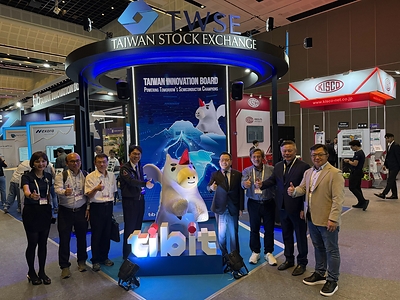
TAIPEI, Sept. 15, 2026 /PRNewswire/ -- QBit Semiconductor (TWO: 7913), a Taiwan-based fabless IC design leader in high-end image processing and motion control, unveiled its robotics and drone chipset roadmap at SEMICON Taiwan 2026, targeting Physical AI control opportunities.
To address space and power constraints in Dexterous Robotic Hands with over 20 degrees of freedom, QBit introduced the highly integrated QB88XX series. The SoC consolidates multi-joint control onto a single chip, reducing system costs and energy consumption. Built on a Cerebellar Model Articulation Controller (CMAC) architecture, it combines quad-core Arm Cortex-A78 processors and an NPU to execute brain commands, in addition, the Arm Cortex-M7, TGEN, and secondary NPU for motor servo control. Supporting up to 32 motors and AI servo tuning, it integrates PCIe, USB, CAN Bus, and camera interfaces for robotic arms and industrial automation. For Drones, QBit is executing a two-phase strategy:
QBit also demonstrated its QB77XX single-object tracking solution, maintaining locks during visual occlusions (tested at relative speeds up to 60 km/h with 10–15 minute flight times). Multi-object tracking will be showcased in Q4 2026. For cybersecurity, QBit's QB7 series passed U.S. NIST CAVP validation for Post-Quantum Cryptography (PQC) ML-DSA algorithms in 2025. The drone solutions incorporate PQC-secured boot for device authentication and firmware defense. About QBit Semiconductor: Media Contact: media@qbitsemi.com
SOURCE QBit Semiconductor LTD. | ||
Company Codes: Taiwan:7913 |
 View original content to download multimedia: