



PlantArcBio's Yield Increasing and Drought-Tolerance Genes Deliver Stronger Yields in First Open-Field Corn Trial
PlantArcBio's Yield Increasing and Drought-Tolerance Genes Deliver Stronger Yields in First Open-Field Corn Trial |
| [24-September-2026] |
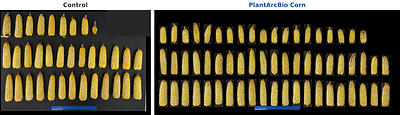
RA'ANANA, Israel, Sept. 24, 2026 /PRNewswire/ -- PlantArcBio (PAB), an Israeli ag-biotech company specializing in gene discovery for row crops, has reported strong results from its first open-field corn trial: plots carrying its lead drought-tolerance genes produced more than double the cob weight of untransformed controls, under both standard irrigation and severe drought.
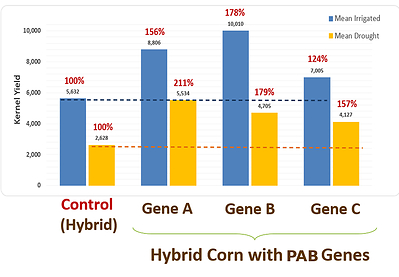
A fast track from gene to field. PlantArcBio's proprietary DIPTM (Direct In Plant) platform screens millions of genes directly in living plants under real stress, rather than in a dish or in silico, surfacing field-ready candidates in months rather than years. It's a discovery engine built to hand seed companies traits already proven in a living plant, not just on paper. Field-proven performance. PlantArcBio's 2026 open-field trial in Israel evaluated 200 plots across both inbred and hybrid corn, testing their discovered genes with multiple replications under standard irrigation and severe, sustained drought from April to August. Corn carrying PlantArcBio's lead genes grew more vigorously and flowered uniformly, a sign of staying reproductively on track under stress, while control corn fell well behind. PlantArcBio's corn produced more and larger cobs per plant, and, in the hybrid background, displayed visibly greener leaves. At harvest, those advantages compounded into markedly heavier cobs: total cob weight per plot more than tripled over the control under irrigation, with a comparable gain under drought. Across three lead gene events tested in hybrid advanced corn, kernel yield outperformed the control in both conditions, in some cases more than doubling drought-stressed yield. A crop under growing strain. Drought is already a leading driver of crop loss worldwide: in a changing climate, the FAO estimates that disasters, with drought foremost among them, cost global agriculture roughly $123 billion a year, destroying an average of 69 million tonnes of grain annually, on the scale of France's entire harvest.1 The 2026 season brought the pattern home to one of the world's largest producers: in its September 2026 report, the USDA cut its U.S. corn yield forecast to 178.5 bushels per acre after hot, dry finishing weather, with national production now projected at 15.8 billion bushels, down 1.2 billion bushels from 2025. Twenty-one of 32 reporting states saw their forecasts decline, with drought and heat cutting yields sharply in Nebraska, Kansas and North Dakota, the last down more than 8%.2 What a 20% gain would mean at scale. Global corn production is forecast at roughly 1.3 billion tonnes for the 2026/27 season.[3] A 20% yield increase applied across that base would add on the order of 260 million tonnes of corn a year, nearly double Brazil's entire annual harvest, delivered from the same land, water and inputs already in use. "These field results confirm what we saw in earlier trials, and they're very encouraging," said Dr. Dror Shalitin, founder and CEO of PlantArcBio. "especially at a time when global yields are facing severe pressure, seeing the gains come through in an actual, replicated open-field trial, under both normal and drought conditions, is an important validation step for our platform and offers a real solution. We look forward to integrating these traits to company's' breeding programs to help tackle the world's growing food security challenge." Open for partnership. PlantArcBio is now engaging with seed companies and breeding programs to license its lead genes for integration into elite germplasm across geographies and hybrid backgrounds. About PlantArcBio PlantArcBio Ltd. is an Israeli agricultural biotechnology company that discovers and develops genes for trait improvement in row crops, including maize and soybean. www.plantarcbio.com | info@plantarcbio.com 1FAO, "The Impact of Disasters on Agriculture and Food Security" (2023): average global agricultural losses of US$123 billion/year and 69 million tonnes of grain/year from disasters, 1991–2021. fao.org/north-america/news/details/first-ever-global-estimation-of-the-impact-of-disasters-on-agriculture/en
SOURCE PlantArcBio | ||
Company Codes: Bloomberg Code:PLNT |
 View original content to download multimedia: