



Vadzo Imaging Positions Bolt-521CRS: Onsemi AR0521 Color 5MP Low-Noise MIPI Camera with NVIDIA Jetson AGX Orin for Medical and Life Science Imaging
IRVINE, CA / ACCESS Newswire / October 23, 2026 /Vadzo Imaging, a provider of embedded vision camera products for OEMs and system integrators, today positions the Bolt-521CRS as a 5MP Low-Noise MIPI Camera with NVIDIA Jetson AGX Orin for medical and life science imaging. Built on the Onsemi AR0521 sensor and part of Vadzo 's MIPI camera portfolio, the Bolt-521CRS combines low noise imaging, Global Reset Release, an on board ISP, and two adapter board variants, and it supports NVIDIA Jetson Orin Nano, Orin NX, and AGX Orin. With this positioning, Vadzo presents a 5MP Jetson AGX Orin MIPI Camera for digital microscopes, ophthalmic and intraoral devices, and laboratory instruments, together with guidance on how Global Reset Release works, where its limits lie, and how to choose among the Orin modules.
Why a 5MP Low-Noise MIPI Camera Is Suited for Medical and Life Science Imaging
Medical and life science instruments ask a lot of a camera. The subjects are small and often dim, such as tissue, cells, and the surface of an eye or a tooth. Illumination is usually controlled by the instrument, and it is frequently pulsed, because a short flash freezes motion, limits heating of a sample, and reduces exposure of a patient. The images must be clean and correctly colored, since a reviewer judges what is seen, and they must be consistent from one capture to the next so that comparisons mean something. A camera that drifts from one session to the next undermines that trust.
Noise is the first limit. In dim scenes the signal is weak, and random speckle hides fine detail and distorts color. Instruments cannot always add light, because bright illumination can heat a specimen or bother a patient. A camera needs large pixels and clean processing to keep dim scenes usable. The second limit is the shutter. Most sensors of this resolution read the picture row by row, and when the sample or the camera moves during readout, or when the light is pulsed, the rows capture different moments, which skews the image or leaves bright and dark bands across it. Both effects are easy to overlook on a still sample and obvious on a moving one.
Global Reset Release addresses the second limit, and it needs careful use. In a normal rolling shutter exposure, each row starts and ends its exposure at a slightly different time, so at 30 frames per second the first and last rows can start up to roughly a frame period apart. In Global Reset Release, every row is reset at the same instant, so exposure starts together on all rows. The rows still end their exposure one after another as they are read out, which means that the light must be controlled, with a flash or a mechanical shutter that ends the exposure for all rows together. Used with ambient light, the lower rows of the frame would be brighter than the upper ones. This is why the feature is described as a tool for controlled illumination, not as a replacement for a global shutter.
Compute completes the picture. Instrument makers add analysis on the device, and they choose among NVIDIA Jetson modules of different size, power, and performance. A camera that works with only one module narrows that choice, and teams that discover this late must redesign after the instrument is nearly complete, which is expensive in regulated product development. Choosing a camera that works across the Orin family at the start keeps those options open.
How a 5MP Low-Noise MIPI Camera Integrates Global Reset Release with NVIDIA Jetson Orin
The Bolt-521CRS is built on the Onsemi AR0521, a 5MP (2592 x 1944) color rolling shutter sensor with a 1/2.5 inch optical format and 2.2 micron pixels. Pixel size is the first lever on noise. A larger pixel collects more photons in a given exposure, and in dim scenes the arrival of photons is itself a source of noise that improves as the signal grows. The sensor also uses a back-illuminated pixel structure that improves light collection further. This makes the module an AR0521 Low Noise MIPI CSI-2 Camera that starts from a stronger signal, which is the most effective way to reduce noise before any processing. A 5MP frame on 2.2 micron pixels is also a deliberate balance, since far more pixels of the same size would need a larger and costlier sensor.
The on board ISP finishes the image inside the module. It performs debayering, demosaicing, color correction, contrast correction, gamma correction, denoising, and lens corrections, and it supports auto exposure and auto white balance. The module outputs YUV422 at 8 bit or 10-bit depth. Because the image is already processed, the Jetson treats the camera as a YUV video source and does not run its own ISP on it, which saves the effort of building and tuning an ISP profile and keeps color the same on every Jetson module. The trade off is that tuning lives in the module, so teams that want raw access should discuss a raw sensor module with Vadzo. For most instruments, a finished image from the first day shortens the path to a working prototype.
Global Reset Release is a feature of the sensor that suits strobed illumination. With the light confined to a short flash, or with a mechanical shutter closing the optical path, all rows record the same moment even though they are read out in sequence, and the image behaves much like one from a global shutter sensor. This helps a digital microscope with a moving stage, a handheld device lit by a pulsed LED, and any instrument that must freeze motion. It does not help in steady ambient light, and it needs a way to synchronize the sensor with the illumination. How the illuminator is triggered depends on the instrument design, and Vadzo advises customers on how to arrange that synchronization for their design. Early discussion also helps decide whether a flash or a mechanical shutter is the better way to end the exposure.
The module is a two board solution with an adapter board in two variants, one for 2 lane MIPI CSI-2 and one for 4 lane. In 4-lane mode, the supported video modes run at 120 frames per second at VGA, 60 at HD, 60 at Full HD, and 30 at the full 5MP resolution. The module draws between 0.80 W and 1.45 W at 3.3 volts, operates from minus 30 degrees C to 70 degrees C, measures 38 mm by 38 mm, is convertible to 32 mm by 32 mm, and weighs 8 grams without the lens. It uses an S-Mount (M12) fixed-focus lens holder with a 74 DFOV lens. On the platform side, Vadzo supports NVIDIA Jetson Orin Nano, Orin NX, and AGX Orin, and the connector on each carrier board determines which adapter fits. Teams should confirm the connector type and the lane count on their chosen Jetson carrier before ordering.
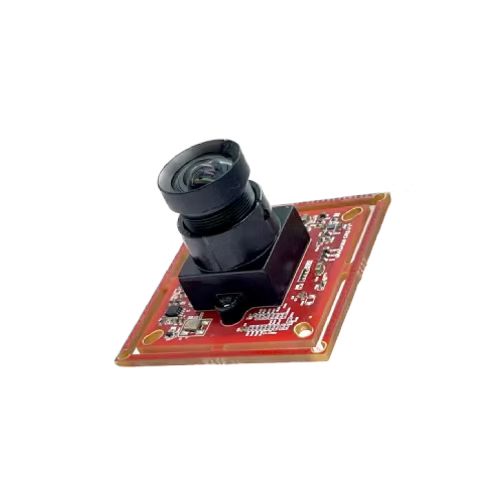
Product Overview
The Bolt-521CRS is a 5MP color MIPI module built on the Onsemi AR0521 sensor and positioned with NVIDIA Jetson AGX Orin for medical and life science imaging. As an AR0521 Rolling Shutter MIPI Camera, it offers high resolution at reasonable cost for scenes that do not move quickly, and as a 5MP GRR MIPI Camera, it supports Global Reset Release for strobe lit scenes. The 5MP On-board ISP MIPI Camera designation covers the finished image processing inside the module, and the 5MP NVIDIA Jetson MIPI Camera designation covers support for the Orin Nano, Orin NX, and AGX Orin modules. The module combines the sensor, the ISP, and an S-Mount (M12) lens holder, and it connects over a 2 lane or 4 lane adapter board. It also serves as a 5MP Global Reset Release MIPI Camera, an AR0521 GRR Rolling Shutter MIPI Camera, and a 5MP Rolling Shutter MIPI CSI-2 Camera for designs that need a standard interface.
Key specs: 5MP (2592 x 1944) Max Resolution | Onsemi AR0521 1/2.5 inch Sensor Format | 2.2 micron Pixel | Color with Rolling Shutter | 2 Lane and 4 Lane MIPI CSI-2 Interface | S-Mount (M12) Fixed Focus Optics with 74 DFOV Lens
Key Capabilities of the 5MP Low-Noise MIPI Camera
Global Reset Release for Controlled Illumination
Global Reset Release resets every row at the same instant, so exposure starts together on all rows, and a flash or a mechanical shutter then ends it for all rows together. Under that kind of controlled illumination, a rolling shutter sensor produces frames that resemble those of a global shutter sensor, which freezes a moving stage or a handheld motion. In steady ambient light the mode does not help, because the rows would end their exposure at different times. Vadzo recommends confirming the synchronization with the illuminator in the real instrument. Pulses in strobed LED designs are short, often well under a millisecond, and the exact timing depends on the light source.
Rolling Shutter Performance and Limitations
The sensor reads the image row by row, which gives high resolution and good sensitivity at reasonable cost. For slow or still subjects, such as a specimen on a stage or a patient sitting still, the effect is invisible. For fast motion under steady light, straight edges can skew, and short exposures reduce the effect. Vadzo offers global shutter modules in its portfolio for instruments where fast motion under steady light is the main concern. Many benchtop and handheld designs do not need that, and the rolling shutter serves them well.
NVIDIA Jetson Compatibility
Vadzo supports the module on NVIDIA Jetson AGX Orin, and it also supports the smaller Orin NX and Orin Nano, so an instrument maker can scale compute without changing the camera. As a NVIDIA Jetson MIPI Camera, the Bolt-521CRS connects through MIPI CSI-2, and Vadzo helps teams choose the right adapter for each carrier board. The same module serves as an AR0521 AGX Orin MIPI Camera and an AR0521 NVIDIA Jetson MIPI Camera, and as a 5MP NVIDIA MIPI Camera it keeps the camera constant while the compute changes. A team can prototype on a smaller module and move to a larger one as analysis demands grow. Validating the camera once and reusing that work across carriers saves time in regulated programs.
Low-Noise Imaging with 2.2-Micron Pixels
Noise starts at the pixel. The 2.2 micron pixels gather more light than smaller pixels on a higher resolution sensor, which gives a stronger signal in dim scenes before any processing. A 5MP Low Noise Jetson MIPI Camera of this kind needs less gain to reach a usable brightness, and less gain means less amplified noise. Cleaner frames help analysis software on the Jetson and give reviewers a clearer view of fine detail. Where illumination can be increased safely, a modest increase usually improves the image more than any camera setting. Safe illumination limits depend on the application, and the device maker remains responsible for them.
Onboard ISP for Processed Image Output
The on board image signal processor turns raw data into a finished color image inside the module, so the Jetson receives YUV frames and does not need an ISP profile for the sensor. An AR0521 Built-in ISP MIPI Camera of this kind gives the same color on every Jetson module, which helps an instrument maker who prototypes on one and ships on another. Manual control of exposure, gain, and white balance remains available for instruments with fixed lighting, and teams that want raw access can discuss a raw sensor module with Vadzo. Fixed lighting makes the finished output especially repeatable.
Two Variants of the MIPI CSI-2 Interface
The module is a two board solution, and the adapter board comes in two variants, one for 2 lane MIPI CSI-2 and one for 4-lane. The 2-lane variant suits hosts with a simple camera connector, and the 4-lane variant carries more data, which supports faster frame rates, such as 5MP at 30 frames per second. Teams choose the variant that matches their carrier board connector and the frame rate they need, and they can change it later without changing the camera board. As an AR0521 MIPI Camera Manufacturer, Vadzo supports adapter selection, lens matching, firmware customization, and enclosure design, and its AR0521 NVIDIA Jetson MIPI Camera range keeps the same documentation from evaluation to production.
"Instrument makers in medical and life science told us three things. They want clean color from dim, small subjects. They often light the subject with a flash. And they do not want the camera to dictate which Jetson module they use. The Bolt-521CRS was positioned around those needs. Large pixels and an on board ISP keep the picture clean, Global Reset Release lets a rolling shutter sensor work with strobed light, and the module supports the Orin Nano, Orin NX, and AGX Orin. We are also direct about the limits, because honest limits build more trust than broad promises. Global Reset Release needs controlled illumination and a way to synchronize it, and we help customers plan that. The device maker remains responsible for performance claims and the regulatory pathway. " - Alwin Vincent, Product Manager, Vadzo Imaging
Medical and Life Science Imaging Application
Digital Microscope and Pathology Imaging
Digital microscopes and pathology devices pair a camera with adapter optics and often with pulsed LED illumination. The Bolt-521CRS works as a Medical Microscopy MIPI Camera at the camera port, where Global Reset Release with a controlled flash freezes a moving stage and low noise imaging keeps stains clean, and as a Medical Life Science MIPI Camera it feeds a Jetson module that runs analysis. Magnification and field of view come from the microscope optics, and Vadzo can help match the sensor to the adapter. Teams should confirm that the adapter optics fill the sensor so the full frame is useful.
Ophthalmic, Dermatology, and Intraoral Imaging
Handheld devices for the eye, the skin, and the mouth work in tight spaces, with built-in illumination and subjects that may move. The datasheet lists ophthalmology, dermatoscope, and intraoral camera types among its application areas. The module serves as a Medical Imaging Jetson Camera for these devices, with a compact 38 mm board and a weight of 8 grams without the lens, and a flash lit design can use Global Reset Release to keep motion from skewing the image. Device makers remain responsible for illumination safety, performance claims, and the regulatory pathway of the finished device. Handheld designs also benefit from the module 's low weight, which keeps the instrument comfortable to hold.
MIPI Camera Integration for Life Science Laboratory Instruments
Laboratory instruments such as colony counters, gel imagers, and sample handlers use camera modules to document and analyze samples. The module functions as a Life Science Imaging MIPI Camera and as a Life Science Jetson Camera in those instruments, where a compact board, finished color, and a choice of Jetson modules make integration straightforward. Instrument makers should evaluate the camera with their real lighting, since illumination affects both noise and color, and they should record the same sample under several light levels to find the lowest level that still gives a clean image. A neutral background and a stable light source make comparisons between samples more reliable.
Frequently Asked Questions
Q: What is Global Reset Release, and when does it help?
A:Vadzo Imaging explains it simply: a rolling shutter sensor normally starts each row a little later than the one above it, which can skew moving subjects. In Global Reset Release, every row starts exposure at the same instant. If a flash or a mechanical shutter then ends the exposure for all rows together, the frame behaves much like one from a global shutter sensor. It helps with strobed illumination and moving stages, and it does not help in steady ambient light. A 5MP GRR MIPI Camera is therefore a tool for instruments that control their own illumination.
Q: Why does a medical imaging camera need low noise?
A:Medical and life science subjects are often small and dim, and illumination cannot always be raised, because bright light can heat a sample or bother a patient. Noise hides fine detail and distorts color, so a 5MP Low-Noise MIPI Camera with large pixels keeps those scenes usable. Vadzo Imaging recommends evaluating with the real lighting, since a modest increase in safe illumination often improves a picture more than any camera setting. A 5MP Low Noise Jetson MIPI Camera pairs that clean input with the analysis power of the platform.
Q: Which NVIDIA Jetson module suits a medical imaging instrument?
A:It depends on the analysis the instrument must run, its power budget, and its cost. Jetson Orin Nano suits compact, low power designs, Orin NX offers a middle level of performance, and AGX Orin suits heavy workloads. Vadzo Imaging supports all three with the same camera, so a team can prototype on one and move to another without changing the camera, and a short trial with the real workload shows which module fits. An NVIDIA Jetson MIPI Camera that stays the same across modules makes that comparison fair.
Q: Does a camera with a finished image limit what a medical device can do on Jetson?
A:It gives up raw access in exchange for consistency. A camera with an on board ISP sends finished YUV frames, so the Jetson treats it as a video source and does not apply its own ISP, which saves tuning time and keeps color the same on every module. Teams that need raw data or custom image processing can ask Vadzo Imaging about raw sensor modules, which use the host ISP instead. Either path is valid, and the right one depends on the instrument. A Medical Imaging Jetson Camera for a regulated device should be validated once and then kept stable.
Q: Why should instrument makers choose Vadzo Imaging as their 5MP MIPI Camera Manufacturer for medical and life science imaging?
A:Vadzo Imaging offers more than a camera module built around a capable sensor. Instrument makers working with Vadzo Imaging receive a module with low noise imaging, an on board ISP, Global Reset Release, and two adapter board variants, along with candid guidance on the limits of GRR and the rolling shutter, plus engineering support for lens selection, firmware customization, and enclosure design. Vadzo Imaging maintains evaluation kits with no minimum order requirement, so teams can test on their own instrument and their own Jetson module before committing to volume production.
Availability
The Bolt-521CRS 5MP Low-Noise MIPI Camera built on the Onsemi AR0521 sensor is available now for evaluation and production orders. Evaluation kits include the camera module, the 2 lane or 4 lane adapter board, and platform documentation, with no minimum order requirement, so an instrument team can place the module behind its own optics and illuminator within days. Instrument teams can test noise performance with their own illumination, discuss Global Reset Release synchronization for their design, and confirm streaming on NVIDIA Jetson Orin Nano, Orin NX, or AGX Orin before committing to a production bill of materials, which tells them more than a datasheet comparison alone. Teams that need a different lens or adapter configuration can ask Vadzo to review the setup. Browse the full range of MIPI camera options at Vadzo 's website or contact Vadzo at support@vadzoimaging.com to request an evaluation unit or discuss OEM integration requirements for medical and life science imaging programs.
About Vadzo Imaging
Vadzo Imaging is a global provider of embedded vision solutions and delivers high performance camera technologies and imaging platforms for applications in robotics, industrial automation, UAVs, edge AI, and medical systems. Its products are designed for seamless integration with leading embedded platforms including NVIDIA Jetson, Rockchip, Raspberry Pi, and NXP i.MX. Vadzo supports customers through hardware customization, firmware development, and module-level drivers, enabling faster development and deployment of vision-based systems across MIPI, USB, GigE, Wi-Fi, and SerDes camera interfaces.
Media Contact
Alwin Vincent
Vadzo Imaging
Email: alwin@vadzoimaging.com
LinkedIn: Vadzo Imaging
YouTube: Vadzo Imaging
X: Vadzo Imaging
SOURCE:Vadzo Imaging
View the original press release on ACCESS Newswire
© 2026 ACCESS Newswire. All Rights Reserved.